
Metrolinx Board Meetings
RORA will be providing on our website regular reports of Metrolinx Board Meetings. These reports will provide observations on and insights in how Metrolinx is managing their subway construction portfolio – especially project governance and contract management for the YNSE.
Please review our initial report below.
Yonge North Subway Extension Update: Metrolinx Board Meeting September 10, 2026
Background
I would not be the first to comment that the important issues discussed at Metrolinx board meetings most likely occur during the private session held prior to the live streamed public meeting. As a result, what the public views at these meetings has the quality of a performative corporate communications exercise likely intended for several audiences, not just the taxpaying public. The public segment of these meetings generally follows a pre-set format: Land Acknowledgement, Safety Moment, CEO’s report, updates on the various
construction projects and quarterly reports.
Updates on the YNSE
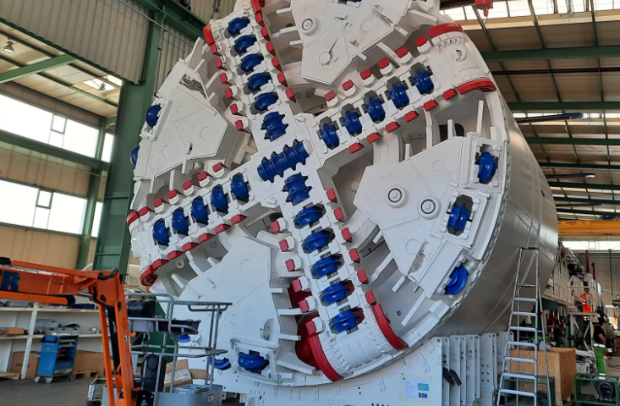
The former Bay store at Centrepoint Mall, Steeles and Yonge is being demolished to facilitate the temporary western realignment of Yonge Street to allow for the construction of the future Steeles subway station. As Andrew Hope, Chief Capital Officer (Rapid Transit) stated at the meeting. Metrolinx will be working with the mall owner to complete this work. No details were given as to what working with the mall owner entails. Concerning the tunnel boring machines, parts for these machines have begun to arrive on site at the launch shaft portal at Langstaff south of the 407. Hope stated that the launch shaft for the tunnel boring machines is basically complete and that the current plan is to begin tunnelling early in 2027.
Specific Comments
The Stations Rails and Systems (SRS) contract is divided into three components:
Underground works, surface works and design & systems integration. Of the eleven applicants invited to submit their Requests for Proposals (RFP), two, North Line Partners and North Extension Transit Alliance (NExTA) applied for both the underground and surface works components. Although this also was not mentioned at the meeting, the SRS contract is being delivered through “an owner-formed Alliance procurement model.” By way of comparison the SRS contract, awarded in January 2025 for a $5.7 billion “Target Price” on the Scarborough Subway Extension was categorized as a “Progressive Design-Build”. The Scarborough Subway Extension SRS will have three underground stations and a bus terminal at each station and eight planned emergency exit buildings. The YNSE will have five stations, three underground and two at grade with planned bus service at two of the underground stations and one of the at grade stations (Bridge Station) and six emergency exit buildings, three so far have been planned between Clark and Bridge Station. The contract type being used for the YNSE would appear to signal that Metrolinx is now taking the view that success in this project depends upon it and its chosen RFP contractors acting
as a fully unified team with shared governance and decision making. This type of format adopts a “no blame culture” where there may be as part of the contract an agreement not to litigate. Gone are the days, it appears, of litigation galore which was a key ingredient of the Eglinton Crosstown mess. Perhaps this explains why more contractors showed up. Will Metrolinx work and play well with others? Only time will tell. However, connecting the dots based with the very limited information made public indicates evidence lessons learned from Deutsche Bahn contract cancellation fiasco as well as the $504 million signalling upgrade write-off.
General Comments
Michael Lindsay is to be given more than a passing grade for occasionally lifting the Metrolinx secrecy veil. An example is the recently publicly released report concerning a February 2026 GO train derailment. However, this “transparency moment” does not, in my view, provide evidence that Metrolinx has materially improved the way it does business. While it seemed that more information was being shared at this meeting than under the previous CEO, the information was shared to create an impression of expertise while not actually demonstrating expertise.
By way of example:
• during his presentation Lindsay commented on the market’s very positive response to this RFQ and that “in this time of volatility and reduced capacity Ontario is still getting some of most competitive responses to procurements that I have seen anywhere in the world.” However Mr. Lindsay did not provide any detail or examples as to the other procurements he had observed;
• he also recommended that government target, among other things, land expropriation costs as a means of helping control project costs. Is he suggesting that property owners be offered less than the fair negotiated settlements mandated by the Expropriations Act?;
• he upbraided those questioning the “new” costs of the Ontario Line by insinuating that the public doesn’t understand how big construction projects are costed;
• Lindsay stated that he has set the agency on “a journey” to reduce Metrolinx’s reliance on third party consultants and contractors which has resulted in “another $70 million reduction in annualized spend” on consultants. However, what he didn’t address is whether paying less for consultants resulted in a net saving for the agency. There were 124 people with vice-president in their title at Metrolinx on the 2026 Ontario Sunshine List up from the 118 the prior year;
• Lindsay announced that the Eglinton Crosstown had reached “final completion” and to show “Metrolinx think” on full display he then went on to glowingly compare this achievement with the Ottawa Confederation Line that has not yet achieved this status. What could possibly be gained by comparing what your agency has completed to a transit project so poorly planned and executed that a public inquiry had to called?
What was also quite noticeable as the meeting progressed was the positive head nodding at least by those within camera range. No hard questions coming from this board. In their book How Big Things Get Done, Bent Flyvbjerg and Dan Gardner explore what makes mega projects constantly go over time and budget. They conclude major failures often occur when an organization believes that all the major risks are external; changes in price and scope changes, accidents, weather, new management — the list goes on. The authors call this “shallow thinking” and their conclusion is that “the biggest risk is you”.
Is Metrolinx combatting its internal biases? Is Metrolinx’s internal governance experienced based? Has it learned lessons from other projects? Has it thought slow in the planning phase so that it can act fast during the construction phase? For the reasons set out in the bullet points above, I don’t think so. The financial risks here are very extreme and very expensive. At 15.6 kilometres in length and with a current price of $34 billion (and counting) the Ontario Line has now breached the $2 billion per kilometre mark. At what point does an alarm go off? Is an alarm going off now but in a private, secure facility at Queen’s Park?
And of course, lurking silently, menacingly in the background is the Frankenstein development to where this subway is designed to go.
The next board meeting is scheduled for November 26, 2026.


Comments